Ramadan is expected to begin on Monday 8 February 2027 — about 15 weeks from now. That sounds like plenty of time, until you count backwards: the creative that launches in late January has to be briefed, shot and approved in December, and the National Day and White Friday campaigns in between are competing for the same team. This is a countdown for planning all of it, with the dates and the research that actually matter.
Two honest caveats first. The Ramadan start date is a forecast until the moon is sighted, and the shopper research below covers the UAE and Saudi Arabia, not Oman — we say clearly where we're applying it to Oman as our own judgement.
The Dates That Matter
- Wednesday–Thursday, 25–26 November 2026: National Day holiday in Oman, per the Ministry of Labour's 2026 holiday calendar.
- Friday, 27 November: Black Friday, with Cyber Monday on 30 November (calendar). Gulf retailers run "White Friday" around the same time, so confirm each retailer's own dates.
- Sunday, 7 February 2027: the expected moon-sighting night.
- Monday, 8 February 2027: the expected first day of Ramadan, according to Gulf News and The National. One calendar gives 7 February, so treat the date as provisional until it is announced.
- Tuesday 9 or Wednesday 10 March 2027: Eid al-Fitr is expected, depending on whether Ramadan lasts 29 or 30 days.
Plan around Ramadan working hours too. Under Oman's Labour Law, Muslim private-sector employees work a maximum of six hours a day and 30 hours a week during Ramadan, as the Ministry of Labour reminded employers for Ramadan 2026. Shoots, approvals and deliveries move more slowly, which is one more reason to finish production before the month starts.
What Ramadan Shoppers Actually Do
The best recent data we found is the ArabyAds and Ipsos Ramadan 2026 report, based on a January 2026 survey of shoppers in the UAE and Saudi Arabia. ArabyAds is an advertising network, and the report doesn't state its sample sizes, so read it as directional — and remember Oman isn't in it.

- Three in five shoppers say their shopping behaviour changes in Ramadan. About half stick to planned lists and traditional items, roughly one in three focus on value, discounts and bulk buying, and only 3–5% say they shop more impulsively.
- Family needs and traditions are the top motivation (65% in the UAE, 55% in Saudi Arabia), ahead of deals and sales (49% and 48%).
- Seven in ten engage with influencer content, but they are more likely to search, save or share it than to buy on the spot.
- What convinces them differs by market: in the UAE a real demonstration of the product led (40%, just ahead of a strong discount at 36%), while in Saudi Arabia a strong discount or exclusive offer led (49%, ahead of a demo at 27%).
The pattern is a planned, family-led Ramadan rather than an impulsive one. That favours helpful, early content — guides, planners and bundles — over last-minute hard sells. Whether Omani shoppers behave the same way is something to test on a small scale first.
On the money side, one analyst estimate puts Arab-world Ramadan advertising at about $1.8 billion in 2026, possibly above $2 billion, with TV still holding the larger share in the Gulf while social media grows fastest (Annahar). It's built on a 2025 baseline and an assumed 20–25% growth rate, so treat it as an estimate, not audited data.
The 15-Week Countdown
This timeline is our own suggestion, informed by the research above. The ArabyAds report recommends launching planning-focused content such as guides and planners four to six weeks before Ramadan, and finalising budget and retail readiness around four weeks out.
Now to Mid-November: Set the Plan
Decide the one goal of the campaign — awareness, leads or sales — and the budget for each channel. Audit what already works: your website, your Google Business Profile, your WhatsApp Business setup and your best-performing content from last year. If you need a budget starting point, our digital marketing budget guide for Oman is the place to begin.
Late November: Treat National Day and White Friday as a Rehearsal
Both are real selling moments, but they're also a free test. Try one offer format, one creative style and one follow-up flow on WhatsApp, and note what customers actually respond to. You'll walk into December with evidence instead of guesses.
December to Early January: Brief, Produce, Approve
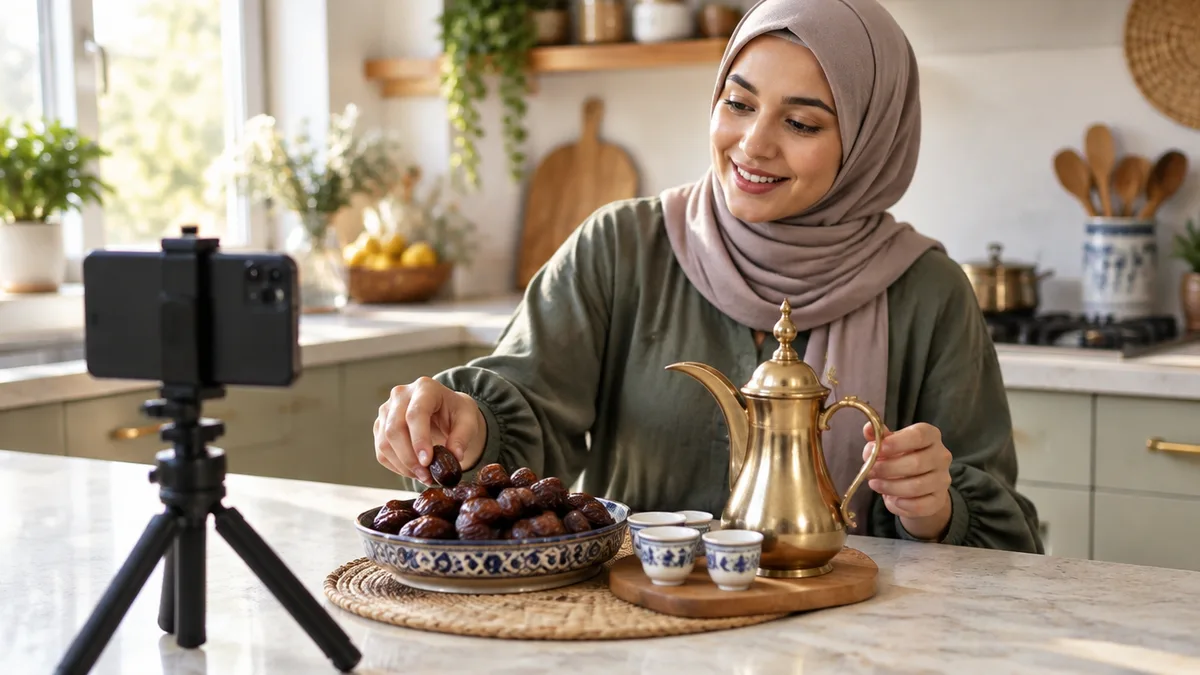
This is where Ramadan campaigns are won or lost. Write the briefs, book creators and any filming, shoot photos and video in Arabic and English, and get every asset approved before the working-hours squeeze begins. The research recommends showing your product in real Ramadan moments — preparing iftar, gifting, hosting — rather than relying on generic festive visuals. If you work with influencers, remember the approval rule below.
Late December to Mid-January: Launch the Planning Content
Six to four weeks before Ramadan, publish the useful things: an iftar planner, a gift guide, a checklist, bundles that save time. Optimise your pages for searches such as "Ramadan offers" and "Eid gifts" in both Arabic and English — our note on bilingual branding in Oman explains why both languages matter.
Late January: Build the Pre-Ramadan Push
Confirm stock and delivery capacity, because interest without availability wastes the budget. Start teasers, retarget people who engaged with your planning content, and soft-launch your main offer to refine it.
During Ramadan: Lead With the Need
The ArabyAds report suggests framing messages as need, then your product, then the benefit — for example, "hosting iftar? this kit saves two hours". Present discounts as making a better gathering possible, not only as saving money. A YouGov survey of the UAE points to busier evenings at home during Ramadan, so test posting and customer service around evening hours.
After Eid: Measure and Document
Look past immediate sales. The report advises tracking branded search, assisted conversions and site traffic after influencer posts, because many people use a post as the start of their research. Write down what worked by category while it's fresh — it's next year's brief.
Rules to Check Before You Publish
On 28 July 2026, Oman's Food Safety and Quality Center warned that prior approval is required before advertising or promoting any food product, including by influencers, agencies, companies and food traders. It cited the Food Safety Law and Ministerial Resolution 69/2024 and said it will take legal action against violators. If your Ramadan campaign involves food, get that approval before the content goes live, and check the current rules for promoting products on social media with the relevant authority.
What We'd Do
- Start planning content early, and make it genuinely useful.
- Pick one clear offer and test it at National Day or White Friday first.
- Show real use, in Arabic and English, instead of generic festive imagery.
- Finish production in December, before reduced Ramadan hours slow everything down.
- Measure what happens after the post, not just the click.
This is exactly the work we do: planning the calendar, producing the content, and running the campaign across social media management, media production and digital marketing. If you'd like a Ramadan 2027 plan built around your brand, let's talk — the sooner you start, the more production time you have.
All images in this article are AI-generated illustrations created with Higgsfield, not photographs.